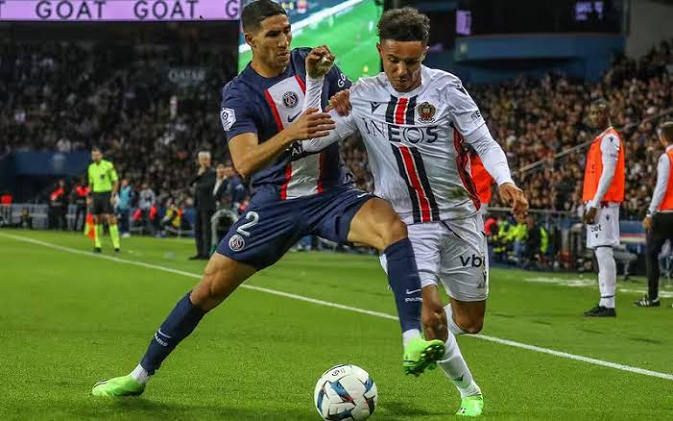
For many new bettors, Ligue 1 in 2017/2018 was their first exposure to a full European league season, with Paris Saint‑Germain dominating the title race while Monaco, Lyon, and Marseille contested the remaining Champions League spots. That landscape created frequent price gaps between the elite and the rest, which made it a useful laboratory for learning how to read team strengths, match contexts, and basic markets before placing real money at risk.
How The 2017/2018 Ligue 1 Structure Shapes Betting
Understanding the league’s format is the first step because it dictates how often teams play, how much rotates between midweek and weekend fixtures, and what each result means in the table. In 2017/2018, Ligue 1 ran from August to May with 20 clubs playing each other home and away over 38 rounds, and three points for a win ensured that a single strong run could transform a mid‑table side into a European contender. This structure amplified the impact of motivation swings late in the season, as clubs chasing continental spots or survival approached matches with different risk profiles than teams settled safely in mid‑table, which in turn influenced how aggressively they attacked and how open their games became.
Key Characteristics Of Ligue 1 2017/2018 For New Bettors
Ligue 1’s identity in 2017/2018 combined a high‑powered champion with a tier of strong chasers and a compressed lower half of the table. PSG delivered a dominant campaign, securing the title with five games to spare after heavily outscoring opponents, while Monaco, Lyon, and Marseille all finished close together behind them, creating a cluster of attack‑minded sides whose matches often attracted high goal lines. At the opposite end, several clubs spent most of the season close to the relegation zone, and their cautious approaches against top teams often produced lower‑scoring matches, which mattered for beginners trying to distinguish between fixtures suited to over/under bets and those better approached through handicap or 1X2 angles.
Translating Basic Market Types To Ligue 1 Matchups
Before you can interpret odds, you need to understand the main football bet types and how they interact with different match scenarios. In European football, the most common market is the 1X2 result bet, where “1” represents the home win, “X” the draw, and “2” the away win, followed by goal‑total over/under lines and various handicap options that adjust for team strength gaps. During the 2017/2018 Ligue 1 season, matches involving PSG or the other top four sides often featured shorter odds on the favourite and higher goal totals, while mid‑table clashes offered more balanced 1X2 pricing but often unclear goal profiles, requiring beginners to decide whether their edge lay in predicting results, goal volume, or both.
To make these concepts usable, it helps to map each basic market to the situation where it offers the clearest expression of your match view. The sequence below offers a structured way to link what you think will happen on the pitch to the choice of betting market, rather than picking options at random.
- Use 1X2 when you have a strong opinion on which side will adapt better tactically, especially in matches between similarly ranked teams.
- Use over/under goals when you trust your judgment on game tempo and chance creation more than on the exact winner.
- Use handicaps when a top team faces a clear underdog, and your main question is how wide the final score margin will be.
- Avoid combining too many markets from the same game until you can articulate a single, coherent match narrative.
For a beginner focusing on Ligue 1 2017/2018, this mapping prevents a common error: treating every match as an opportunity to use every available market. By connecting the league’s structure to specific bet types, you develop a habit of asking whether your insight is really about who wins, how many goals are scored, or how comfortable a favourite might be, and then you select markets that reflect that core idea rather than sprinkling small stakes across unrelated outcomes.
Reading Team Profiles Beyond The League Table
The league table offers only a snapshot of points and goal difference, and during 2017/2018 some Ligue 1 teams looked stronger or weaker in underlying performance than their positions suggested. Bettors who studied goals scored and conceded home and away, recent goal trends, and the quality of opponents over the previous few weeks gained a clearer view of whether a club was genuinely improving or merely benefiting from a soft run of fixtures. For example, a team hovering mid‑table but with a strong home scoring record against top‑half rivals might be undervalued in certain 1X2 or Asian handicap markets, even if their overall points total did not stand out.
Comparing Home And Away Forms As A Practical Mechanism
One powerful mechanism for refining match predictions is comparing a home side’s record in its stadium to the visiting team’s away performances. Analysts often aggregate the wins, draws, and losses from those split records to estimate probabilities for each outcome, under the logic that teams behave differently depending on venue and crowd influence. In Ligue 1 2017/2018, many lower‑half teams were particularly reliant on home points, while some of the stronger clubs carried their attacking output more consistently away, which created asymmetric matchups where the home team’s crowd advantage clashed with a visiting side’s superior talent and tactical identity.
Building A Simple Pre‑Match Checklist For Ligue 1 Games
Beginners benefit from a repeatable routine, because it reduces emotional decisions and ensures that each bet rests on a consistent set of questions. Focusing on Ligue 1 2017/2018, a concise pre‑match checklist can capture the season’s specific dynamics while teaching habits that carry over to other years and leagues. The aim is not to predict every match perfectly but to make sure you only bet when the answers you find point to an edge that the current odds do not fully reflect.
Before listing that checklist, it is worth highlighting how each question addresses a particular type of risk. Some points focus on raw performance, others on schedule fatigue or motivation, and together they form a filter that screens out matches where you are essentially guessing rather than reasoning from evidence. That distinction is crucial for new bettors, who often confuse confidence with actual informational advantage, especially when following popular leagues like Ligue 1.
- How do both teams’ last five Ligue 1 matches compare in goals scored and conceded?
- Are there key injuries or suspensions, especially to goalkeepers, central midfielders, or forwards?
- Does the home side normally raise its performance at home, based on 2017/2018 records?
- Are either team fighting for Europe, the title, or survival, altering their risk tolerance?
- Do the odds reflect recent form too heavily, ignoring tougher or easier fixture runs?
Using this checklist forces you to articulate reasons behind any wager instead of chasing narratives or short‑term streaks. During the 2017/2018 season, many Ligue 1 fixtures involved strong favourites whose prices were compressed by public perception, and the checklist helped beginners decide whether that compression was justified by underlying factors or if the dog offered hidden value in handicap or double‑chance markets.
Learning From Odds Movement And Market Sentiment
For new bettors, odds are not just numbers; they represent the market’s collective evaluation of team strength, injuries, and situational factors. In Ligue 1 2017/2018, early prices often moved as news about line‑ups, rotations for European matches, or weather conditions emerged, particularly for clubs with congested schedules. Watching these shifts taught beginners that reacting blindly to steam, without checking the underlying cause, could be as dangerous as ignoring odds changes completely.
Over time, observing whether prices shortened or drifted around certain teams or total‑goal lines provided clues about where professional money concentrated. If a mid‑table side regularly attracted late support when fielding its strongest line‑up, that pattern signalled that deeper models rated them highly, and beginners could incorporate that into their own pre‑match reasoning rather than relying purely on pundit commentary. Conversely, when odds moved sharply against a popular favourite ahead of a Ligue 1 fixture, it often indicated hidden information—perhaps fatigue or an unexpected rotation—that a disciplined newcomer should investigate before deciding whether the earlier narrative still held.
Using A Sports Betting Service Without Losing Analytical Focus
Once a beginner has a basic routine for Ligue 1 2017/2018, the way they access markets can either support or undermine that discipline. When a bettor believes they have found an edge in how a specific match will unfold, the next decision involves choosing where to execute that view while keeping emotions in check and resisting impulsive add‑ons. In those circumstances, engaging with ufabet as a sports betting service is best treated as a logistical step—opening access to multiple football markets and odds for Ligue 1 fixtures—rather than a source of predictions, so that the bettor’s own pre‑match analysis remains the primary driver of which selections they take and which they ignore.
Table: Ligue 1 2017/2018 Angles For Common Beginner Markets
To connect the abstract ideas above to specific opportunities, it helps to pair typical bet types with scenarios that frequently occurred in Ligue 1 during 2017/2018. This approach makes selection choices more concrete, because each market is anchored to a recognisable match profile rather than treated as interchangeable.
| Bet type | Ligue 1 2017/18 situation it fit best | Key risk for beginners |
| 1X2 match result | Mid‑table vs mid‑table with clear home strength edge | Underestimating draw probability |
| Over/under 2.5 goals | Top‑four side vs relegation candidate with open style | Misreading underdog’s defensive approach |
| Asian handicap favourite | PSG or top side vs tired mid‑table opponent | Overpaying when rotation weakens the favourite |
| Both teams to score | Two attack‑minded sides with shaky defences | Ignoring key striker injuries or tactical conservatism |
Interpreting this table becomes a practical exercise when scanning the 2017/2018 fixture list and recent form. If Lyon hosted a defensively fragile visitor during a scheduling window with normal rest, the over/under and both‑teams‑to‑score markets might provide clearer expressions of your expectations than the compressed 1X2 price on the home win, whereas a tight clash between relegation‑threatened sides might push you towards cautious stakes or no bet at all, because the table’s pressure could produce erratic, low‑quality football. The more precisely you can map each real match to one of these situational profiles, the less you rely on guesswork and the more you depend on structured cause‑and‑effect reasoning.
Coordinating Analysis With Broader casino online Tools
There will be times when a beginner wants to cross‑check their Ligue 1 2017/2018 views against more detailed statistics, live odds, or alternative bet types before committing. When that need arises, consolidating information in one environment helps maintain focus, because it minimizes context‑switching between multiple sources and reduces the temptation to chase every new idea that appears. Under those conditions, exploring a casino online context that integrates football data, in‑play prices, and historical records can support an educational approach, provided the bettor treats extra features as analytical aids rather than distractions from the structured pre‑match checklist they have already developed for Ligue 1 fixtures.
Summary
The logic behind a Ligue 1 2017/2018 betting guide for beginners rests on connecting the league’s specific competitive shape to a small set of core markets and a disciplined pre‑match routine. By understanding how the season’s structure, team profiles, and odds movements interact, new bettors can move from emotional guesses to reasoned selections, using tools like home/away splits and basic market mapping to decide when a match offers enough informational edge to justify a bet. Treated this way, the 2017/2018 campaign becomes both a learning environment and a template for analysing future Ligue 1 seasons with greater clarity and restraint.

Hi, I’m Mohan, and I love writing. I have always enjoyed reading shayari, quotes, captions, and poetry in different languages. I started this website to share meaningful words that help people express their emotions. I spend time researching and collecting lines in English, Hindi, and Marathi that connect with real feelings. My goal is to make it easier for readers to find the right words for any moment or mood.