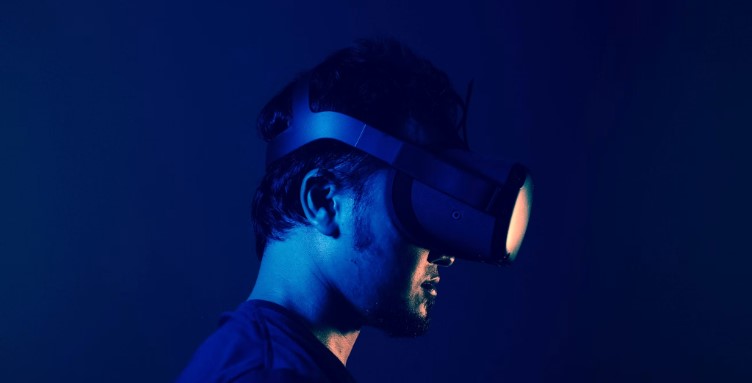
The earliest arcade adventures relied on imagination to fill sensory gaps, yet pixels alone could never replicate the thrill of genuine presence. Virtual reality flips that script by surrounding players with responsive 3D spaces, spatialized audio, and motion-tracked interaction that persuades the brain to treat digital objects as tangible. As hardware costs decline and content libraries expand, studios now treat VR not as a novelty but as the next logical step in interactive entertainment.
Monetization trends accelerate adoption. Subscription services, in-headset storefronts, and the rise of hybrid platforms such as a casino with crypto deposit ecosystem demonstrate how seamless payment layers encourage spontaneous entry into immersive sessions. The combination of high-fidelity worlds and friction-free transactions turns playtime into an always-available experience rather than a fixed appointment with a console.
Cutting the cord between display and imagination produces several creative benefits. Traditional flat-screen design often funnels attention toward heads-up displays and controller combos. By contrast, VR favors natural gestures, dynamic sound cues, and environmental storytelling that rewards exploration over menu surfing. Game designers increasingly borrow techniques from theater and architecture, scripting light, texture, and proximity to guide focus.
Core Experiences That Set VR Apart
- Embodied Presence
Head and hand tracking translate physical motion into digital action, convincing the mind that virtual feet rest on virtual ground. - Spatial Audio Cues
Directional footsteps or whispered dialogue allow stealth mechanics and emotional tension that stereo speakers struggle to match. - Scale Manipulation
Worlds can switch from towering kaiju battles to tabletop dioramas, giving designers fresh ways to play with perspective. - Natural Interaction
Tilt controllers become paintbrushes, swords, or surgical tools, removing abstraction and teaching mechanics through intuition. - Social Co-Location
Avatars share a synchronized space, enabling cooperative puzzling, live concerts, and mixed-reality sports leagues that feel closer to in-person gatherings than voice chat ever achieved.
While these advantages headline marketing campaigns, behind the curtain engineers refine optics, reduce latency, and perfect inside-out tracking so that comfort improves with each hardware generation. Lighter headsets and pancake lenses prevent fatigue, allowing longer play sessions without motion sickness.
Engine and Hardware Synergy
Modern VR engines now stream high-resolution textures only where the eye currently looks, a technique known as foveated rendering. This approach slashes GPU load and keeps frame rates above the critical ninety-frames-per-second threshold that prevents disorientation. Simultaneously, Wi-Fi 6E and upcoming 60 GHz wireless standards lower input lag, freeing users from tethered cables without degrading image quality.
Peripheral ecosystems expand too. Haptic gloves deliver localized vibration that mimics raindrops or recoil, while treadmills provide room-scale locomotion inside apartment-scale footprints. Even standard gamepads see new life as accessories for cockpit sims or strategy titles where gesture input alone feels insufficient.
Content creators embrace cinematic production pipelines. Volumetric capture stages record live performers in three dimensions, later integrating those performances within interactive storylines. Branching narratives exploit the fact that participants literally look away from plot-critical information, allowing surprise reveals based on attention patterns.
Market Signals Driving Investment
Venture funding pivots from speculative prototypes toward scalable live-service models. Fitness apps that convert workouts into game quests show steady retention thanks to intrinsic health benefits. Educational institutions adopt VR labs to teach anatomy, engineering, and soft-skill training without expensive physical setups. Esports organizers experiment with mixed tournaments where remote contestants share a synthetic arena visible through spectator headsets.
Publishers also bundle cross-reality perks: completing a VR dungeon might unlock cosmetic items on a linked mobile title, encouraging engagement across ecosystems. Advertising blends subtly into these spaces; branded holograms or contextual product placement feel less intrusive when organically woven into world-building.
Challenges That Still Need Solving
- Accessibility Barriers
High equipment costs and sensitivity to motion limit adoption among younger or budget-constrained demographics. - Design Language Learning Curve
Some studios attempt straight ports of flat games, overlooking ergonomics and causing fatigue or confusion. - Content Discovery
Storefront algorithms remain immature, making it difficult for niche gems to surface without influencer backing. - Cybersecurity and Privacy
Eye-tracking and biometric data introduce fresh vectors for misuse, demanding transparent policies and robust encryption. - Standardization Gaps
Competing SDKs fragment the market, forcing studios to pick winners or shoulder extra porting expense.
Despite those obstacles, momentum remains undeniable. Enterprise deployments reduce manufacturing errors, therapy applications improve phobia treatment, and live performances reach global audiences without physical travel. Each success story fosters public familiarity, gradually turning VR into an expected feature rather than an exotic add-on.
Outlook: A Convergence of Realities
Analysts predict mainstream penetration once headsets shrink to sunglasses form factors and cellular networks deliver sub-ten-millisecond latency. At that point augmented and virtual overlays will blur, letting users transition from commuting to dungeon-raiding with a voice command. Cloud rendering will handle complex lighting, leaving local devices to manage display and personal data. Developers gain freedom to imagine physically impossible mechanics—gravity inversion, non-Euclidean rooms—that still feel coherent because the body believes the space surrounding it.
Interactive media underwent similar paradigm shifts before. Sound transformed silent film; color revitalized cinematography; online connectivity reinvented multiplayer. Virtual reality now stands on the cusp of delivering the next leap, one grounded in sensory conviction rather than brighter pixels alone. Studios that master this language early will define genres that future audiences consider standard practice, just as open-world design or match-based shooters once did. Spectatorship will evolve, education will adapt, and gaming will finally inhabit the three-dimensional canvas human perception naturally occupies.
In short, VR’s growing importance stems from its power to dissolve the boundary between player and play, turning imagination into a place that feels every bit as real as the living room left behind.

Hi, I’m Mohan, and I love writing. I have always enjoyed reading shayari, quotes, captions, and poetry in different languages. I started this website to share meaningful words that help people express their emotions. I spend time researching and collecting lines in English, Hindi, and Marathi that connect with real feelings. My goal is to make it easier for readers to find the right words for any moment or mood.